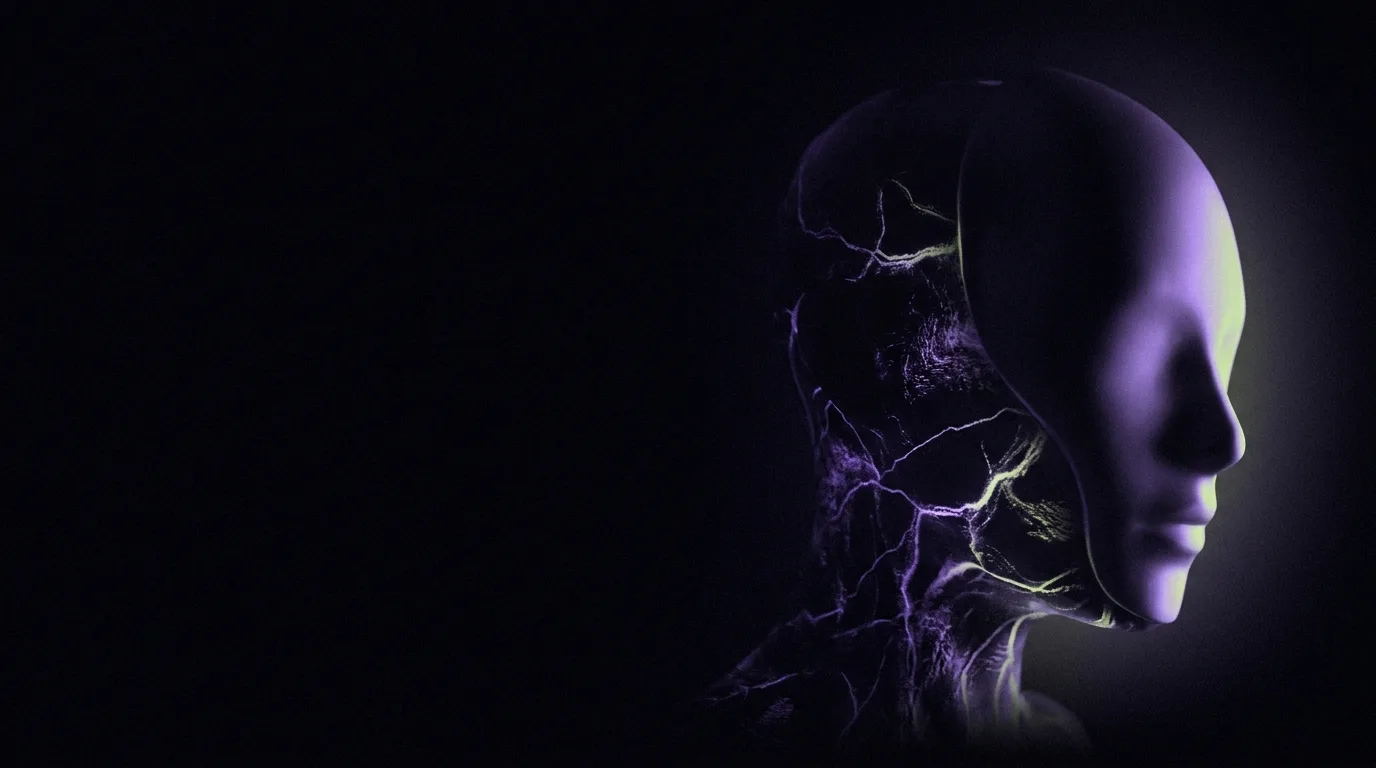
Masking in ADHD: the exhausting performance of 'fine'
Performing "totally fine" so well nobody clocks the effort.
Compensating for your symptoms until you look effortless — effective, and quietly exhausting. It's why so many get missed for years.
a 3-minute read, not a lectureMasking is the constant, effortful performance of looking "fine" and neurotypical — suppressing fidgets, rehearsing conversations, hiding the struggle so nobody clocks the effort. It can be a genuine survival skill, but running it all day is exhausting and can blur your sense of who you are underneath. Naming it is the first step to choosing when to drop it.
1. It's not lying. It's surviving.
Masking is hiding or compensating for ADHD traits so you can pass as neurotypical — rehearsing "normal," suppressing stims, over-preparing for everything, performing put together when you're anything but. A lot of it is driven by fear of rejection or criticism so sharp it rewires how you show up in every room. It's a skill, often a brilliant one, built quietly over years.
And it works — which is exactly the trap. The better you mask, the less help anyone thinks to offer, and the more it costs you in private. The world sees fine. You pay for fine.
It's not lying. It's surviving in a room not built for you.
2. The invisible load.
Masking is constant background work — suppressing, monitoring, compensating, scanning the room for what "normal" looks like and matching it in real time. It draws heavily on the same executive-function resources the ADHD brain already runs lean on, which is a big part of why it's so expensive. It's a heavy cognitive load that never once shows on the outside (Shaw et al., 2014).
Run it long enough and it tips into overwhelm and burnout — a blurry sense of who you actually are included. It's a big reason women and quiet kids get diagnosed late — or never. The mask was too convincing, including to you.
3. If you live here, these will sting a little.
4. You don't have to rip the mask off. Just set it down sometimes.
None of this is "just be yourself" on command. It's lowering the cost, gently, one safe inch at a time.
Find your unmasking spaces
Notice where — and with whom — you can breathe out. One person, one room, one corner of your life where "fine" isn't required. Protect it.
Name the cost out loud
Masking is real labor, not a character flaw. Saying "this took a lot out of me" — even just to yourself — makes the invisible work count.
Drop one mask at a time
Start small and low-stakes: the stim you usually hide, the "I don't know" you usually fake. Tiny, safe experiments — not a grand reveal.
Schedule the recovery
After heavy social load, build in downtime on purpose — quiet, alone, no performing. Recovery isn't a reward you earn; it's part of the cost.
Let some things be visibly hard
Reduce the performance. You're allowed to struggle in front of people. Every time the effort shows and the sky doesn't fall, the mask loosens.
Get curious about who's underneath
Gently. What do you like, need, prefer when no one's watching? There's a real person under the roles — and meeting them is the whole point.
Quick answers.
What is ADHD masking? +
Why is masking so exhausting? +
Why do women with ADHD get diagnosed late? +
How do I stop masking my ADHD? +
Finishing is the part ADHD makes hard — so, genuinely: nice. Take one thing that clicked, not ten. The rest will keep.
One pattern like this, every week.
The Dot Connector — one pattern, one tool, one "oh THAT'S why," straight to your inbox. No spam, no shame.
Unsubscribe anytime. Privacy · Terms · Accessibility · Educational content, not medical advice.
